Activities  Events  Travel  Maps Key Facts  Wildlife  Habitats  Kids Zone  Education Park Authority  Meetings  Vacancies  Publications Communities  Business Applications  Weekly Lists  Local Plan  Planning Team
Images of Loch Lomond and The Trossachs National Park
 

Signs are positive for National Park Barn owls

15 February 2012

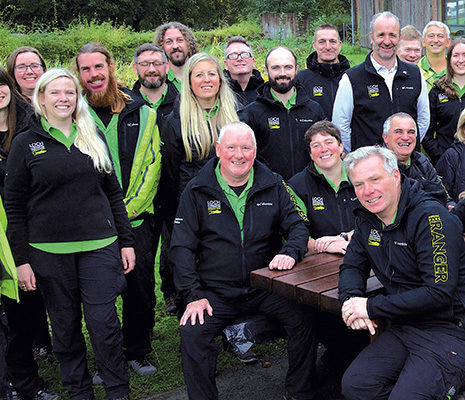
National Park Rangers with the help of Mike Steward, a retired Forestry Commission Ranger, have been working together for the last four years to help increase barn owl numbers across Loch Lomond and The Trossachs National Park and their efforts are starting to pay off.

Once abundant in the UK, barn owl populations have started to decline due to a number of factors including changes in agricultural practices and more common use of pesticides.

Keen to help increase numbers, Mike Steward approached Loch Lomond and The Trossachs National Park with a proposal to build and site a total of 40 barn owl boxes across the Park.

The National Park’s Natural Heritage Grant Scheme funded the project and with the help from park rangers and volunteers, Mike placed the boxes in suitable locations on trees, in outbuildings and barns. The first twenty boxes were installed in 2009 and  additional funding was awarded from the Grant Scheme which went towards another twenty boxes.

Barn owlNational Park Ranger Steven Kenney spoke about the results: “ The National Park was keen to support this project to help increase numbers of barn owls. Despite a very cold winter and prolonged snow cover experienced in 2010, barn owls managed to breed producing on average 3.3 owlets per breeding pair and 12 out of 40 boxes were used for breeding with many others used for roosting.

In 2010, field vole numbers were also at a peak and resulted in a phenomenon that Mike and I had never come across before. I was helping Mike ring the owlets with my colleague Adam Samson and found that the owls were using some of the boxes as larders to store field voles. Some of the boxes had up to 15 dead voles stored!

Last year we had a further 16 barn owls hatch and we managed to ring 13 of them. Over the winter many of the boxes have become roosting sites for barn owls and some have even become temporary winter havens for other species including squirrels, pine martens, crows and wood pigeon.

We have already started inspecting owl boxes and removing any pellets the owls have left in them.  From early May, working with Mike we will inspect the boxes for signs of eggs and chicks. Number s are steadily increasing each year and we hope 2012 will bring even more positive results.”

Barn owl facts

The sound of a distant blood curdling screech or the sight of a ghostly white form as it silently passes overhead are often peoples first encounters of a Barn owl (Tyto alba.) It is little wonder then that in so many cultures and in folklore they are regarded as harbingers of death.

Literary scholars such as William Wordsworth referred to the “Owl of doom” in his poetry. In reality the Barn owl merits none of this negativity. Even American first nation peoples told stories of how people who were wicked in life would be reincarnated as Barn owls when they died.  

A largely nocturnal and elusive species with a wingspan of 85-93cm, they can be seen systematically quartering rough grassland at dawn and dusk. On occasion they can also be seen hunting during daylight hours during winter and whilst feeding their young. Field voles and other rodents make up much of the staple diet of the Barn owl however they have been known to occasionally prey on small birds and even bats.  

As the name would suggest Barn owls often nest in farm buildings. They have also been known to nest in cavities in old broadleaf trees and even holes in walls and rock faces. Sadly the availability of suitable nesting sites near good quality hunting habitat is becoming less common.