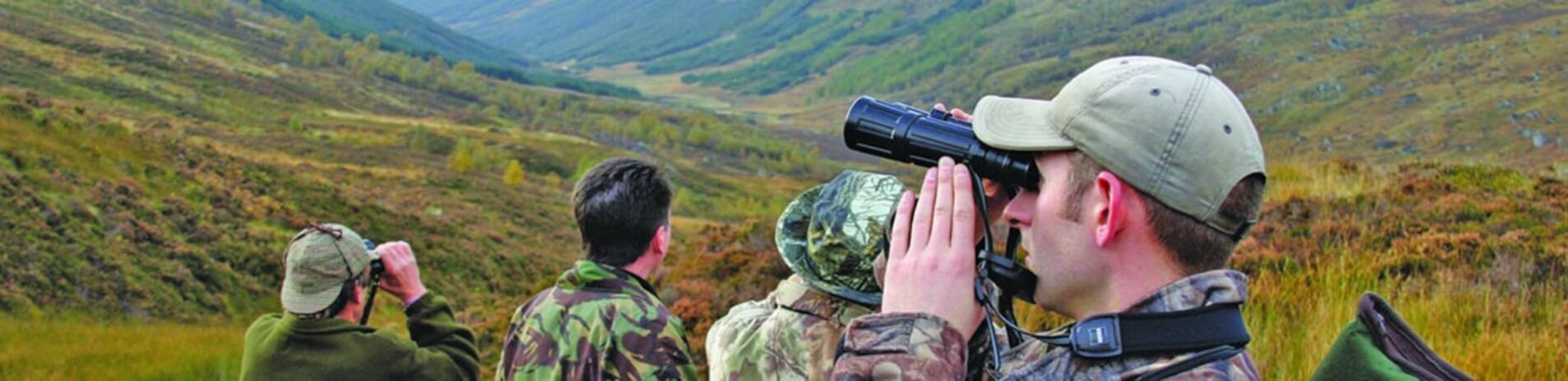
Deer management, based on sound ecological principles, is an essential part of managing land in a sustainable way. It is mainly the impact of deer that land managers are concerned with, rather than the actual number of deer. It is important that numbers of deer are not allowed to increase to levels where there is an adverse effect on their welfare or their habitat. Deer belong to no-one and therefore represent a shared resource for the people of Scotland. The right to control and manage deer, however, is held by the owner of the land upon which they cross. Deer range over land ownership boundaries and it is through the Deer Management Groups in the Park that land managers work together to manage the deer collaboratively.
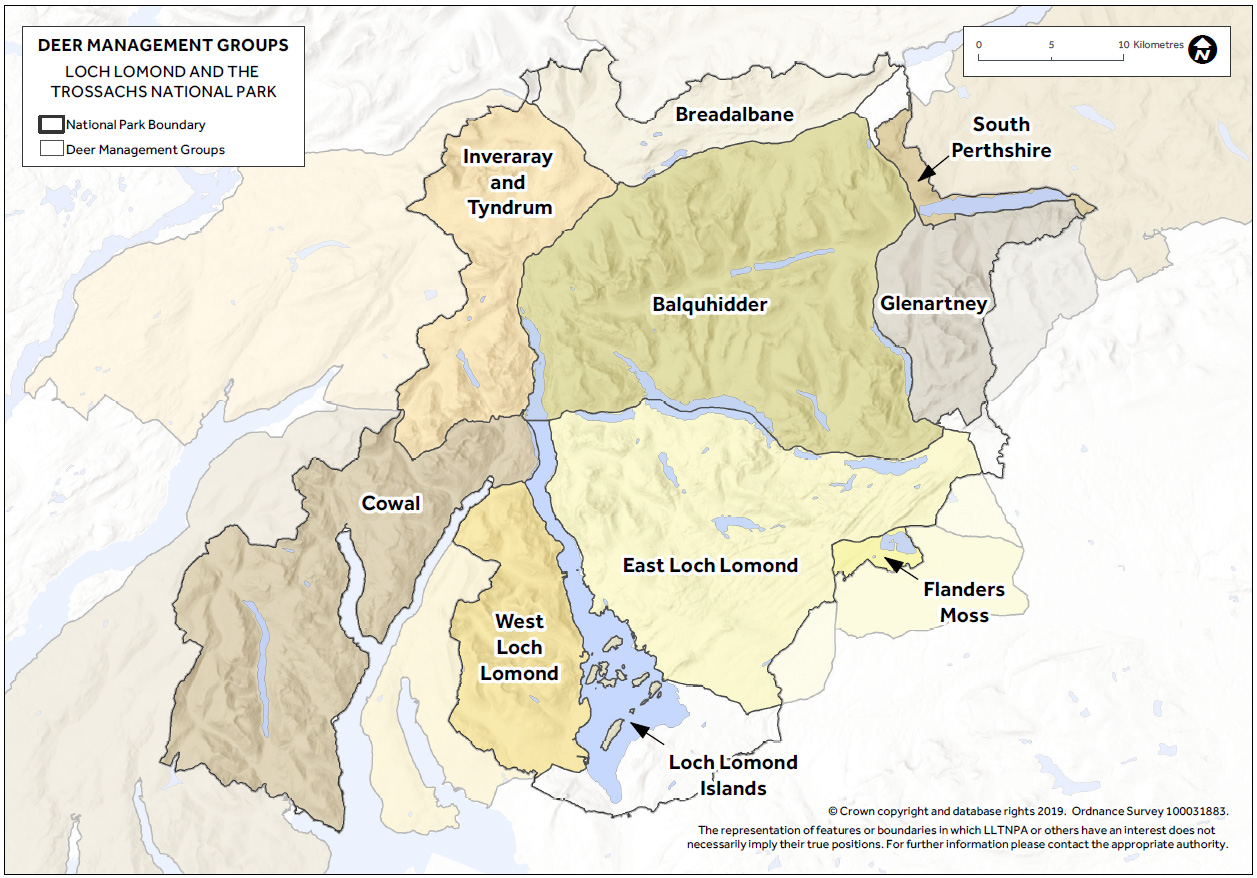
This map shows the different groups and the areas they cover in the National Park.
Liaison between neighbours is essential to the efficient implementation of deer management objectives and occurs through local Deer Management Groups (DMGs). These groups provide a forum for explaining deer policy and for considering mutually beneficial co-operation on deer management matters.
The National Park’s aim in working with Deer Management Groups is to achieve the following:
A mosaic of deer densities allowing different deer management objectives to be achieved in different parts of the Park
A deer management planning process which seeks agreement from all interested parties on what deer densities should be
Good communications between all involved in deer management
Deer recognised as a valuable asset throughout the Park
Deer impacts viewed as being in balance with habitats
Deer management carried out to high professional standards and respected by all
Deer fence
In order to achieve all this, we are working with Deer Management Groups in the Park to support the work that they do. The desired outcome is that land managers have the density of deer on their holding that allows them to achieve their land management objectives whilst protecting and enhancing the important habitats found within the National Park.
Deer management is an integral part to delivering the outcomes set out in the National Park Partnership Plan. By supporting Deer Management Groups, we will help to deliver multiple benefits such as improving the condition of our woodlands and uplands, through projects such as our Habitat Impact Assessment monitoring and peatland restoration. It is provides employment in remote communities.
Currently many of our habitats in the National Park are over-grazed by herbivores, both domestic and wild and by working in partnership with other partner agencies, such as SNH, and with land managers we can work to reducing these pressures.
Deer management is an established way of life in Highland Scotland, which generates income for sporting estates, helps maintain healthy deer populations, contributes to sustainable management of the environment, and supports local employment. The participation of visitors in deer stalking can be a significant part of the income of the estates.
Local butcher
Stalking creates a number of ‘spin-off’ jobs in rural communities. It generates income for other parts of the rural economy such as hotels and shops, fencing suppliers and craft businesses, and supports a significant wild venison industry. The Association of Deer Management Groups estimates the annual value of deer stalking lets in Scotland at between £5 million and £7 million, with venison sales averaging the same.
We are working closely with NatureScot and other relevant parties to encourage and develop greater collaboration regarding use of deer larders. Loch Lomond and the Trossachs National Park Authority has funded a mobile chiller trailer, which NatureScot has procured and will manage deployment across key areas within the National Park area to provide additional capacity for carcass storage.
The 2020 report by the independent Deer Working Group (DWG) to the Scottish Government made 99 recommendations relating to the management of wild deer in Scotland. Most of the recommendations were accepted and we are working with the Scottish Government to implement them through NatureScot’s Deer Work Programme.
Implementing the DWG recommendations is a key part of delivering Net Zero ambitions and the Scottish Biodiversity Strategy (SBS), as well as helping to meet the challenge of halting biodiversity loss by 2030 and reversing it with large-scale restoration by 2045.
Loch Lomond and the Trossachs National Park Authority sit on the Deer Management Strategic Board and its associated Operational Delivery work stream. The Deer Management Strategic Board was established by the Scottish Government and will agree priorities to improve Scotland’s deer management systems, with actions split across four work streams: legislation, regulation, incentives and operational delivery. This will ensure that deer management remains integral to the delivery of the SBS ambition.
For example, the Operational Delivery work stream has identified Deer Management Priority Areas where there will be a focus on delivering deer management at a landscape scale. Loch Lomond and Trossachs National Park are one of the Deer Management Priority Areas.
In addition to working with Scottish Government and NatureScot, we attend the Deer Management Round Table, which meets regularly to discuss a range of issues associated with deer management. We are also an active member of The Common Ground Forum, a cross-section of individuals and organisations connected to upland deer management in Scotland, who are committed to working in the spirit of Our Common Ground Accord.
The Herbivore Position Statement sets out the National Park Authority’s ambitions and long-term approach to herbivore management in the National Park.
The Herbivore Delivery Plan covers a 5-year period (2025 – 2030), with an annual rolling action plan. It has been developed with input from NatureScot, FLS, Scottish Forestry, and Association for Deer Management Groups (ADMG), and sets out the current work underway and the next steps we need to take. This will continue to evolve with partners and be updated on an annual basis.
In 2025, we launched a Deer Management Incentive Scheme to trial ways to support deer managers in tackling high deer numbers in the National Park. The incentive scheme is running again for 2026/2027.
We also support training opportunities to ensure high standards of competence in deer management through our Deer Managers Training Grant.
The Park Authority continues to support delivery through Deer Management Groups by:
Providing clarity on the public interest priorities
Supporting the use of herbivore impact assessments and habitat monitoring to inform management
Supporting peatland restoration projects and woodland improvement & creation projects
Supporting Deer Management Groups and facilitating communication and joint action across Deer Management Group boundaries where necessary